The truffle is a mysterious delicacy about which many legends and stereotypes exist. Some imagine it as an icon of glamorous cuisine, others perceive it exclusively as a rare and astronomically expensive ingredient. But the truth is much more interesting: the truffle is not about ostentatious pathos, but about depth of flavor, history, a connection to the land and the people who know how to find the forest's most secret scent.
What is a truffle: biology, origin, myths
A truffle is not just a mushroom that can be seen on a supermarket shelf. It belongs to the genus Tuber and grows exclusively underground, forming rounded, uneven, "tuber-like" fruits at a depth of up to half a meter. Its true essence is hidden under a layer of soil, leaves, and mystery: what we cut or extract from underground are merely fruiting bodies intended to spread spores.
A distinctive feature of truffles is their symbiosis with trees. A truffle cannot live without trees. Fungal hyphae entwine the roots of oak, hazel, and chestnut, forming a strong union — mycorrhiza. The tree shares sugars with its underground "neighbor," and the latter, in turn, helps obtain water and minerals. This partnership story, lasting for years, is what makes the truffle a real gem — it does not grow "wherever it pleases," but only under certain trees, in very specific microclimates.
Two truffles: white and black
In the world of haute cuisine, the truffle has two main stars — white and black.
The black truffle, in turn, has dozens of varieties, however, the most common and valuable is **Tuber melanosporum** — a winter variety that is second in cost only to the white truffle.
There also exists an autumn variety of black truffle — **Tuber uncinatum**, distinguished by a softer but richer aroma. It has warm nutty notes with hints of forest mushrooms and slight sweetness.
For a first acquaintance with truffles, we also offer the summer truffle **Tuber aestivum** — more affordable in price, but interesting in taste characteristics.
Comparative table
| Truffle Type | Location | Season | Appearance | Taste/Aroma | Usage Features |
|---|---|---|---|---|---|
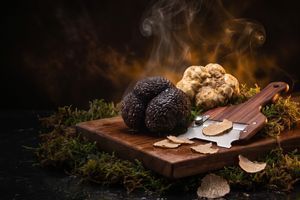
| White (Tuber magnatum Pico) | Northern Italy (Alba, Piedmont), Croatia, Balkans | September–December | Round, golden-cream, with white veins | Very intensive: earth, nuts, cheese, honey, garlic, musk | Exclusively raw, do not subject to thermal processing! Added as a finish to dishes, thinly sliced |
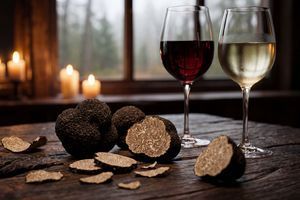
| Black (Tuber melanosporum) | Central/Southern Italy, France, and partly Balkans | November–March | Dark brown with white veins, surface with "pyramids" | Deep, umami, chocolate, forest, hazelnut, sometimes a little pepper | Can be delicately heated — added to warm dishes and sauces |
| Summer (Tuber aestivum) | Europe, particularly the Balkan region | May–August | Dark, with light brown veins | Very delicate, light notes of nut, mushroom aroma | Mostly raw; for better results use a larger quantity |

White truffle is the "diamond" of the kitchen. It should not be cooked — high temperature destroys even a hint of its subtle aroma. Correct serving is thinly sliced onto pasta, risotto, or fried eggs directly before serving at the table. Just 5–10 grams per person is enough for the dish to be remembered for a lifetime.
Black truffle allows a little more creativity in warm dishes: its taste reveals itself during minor thermal processing. It harmoniously makes friends with eggs, butter, cream, soft cheeses — that is, those products capable of "picking up" the fat-soluble aromatic substances of the fungus.
Summer truffle is a starting point for those who are not yet ready for white or classic black. Its aroma is lighter, but in larger portions, it can still become an adornment for pasta or toast with butter.
Why are truffles so expensive?
Only a few corners of Europe offer the necessary soil (pH 7-8), microclimate, and natural symbiosis with appropriate trees. Even on plantations where donor trees are grown, one must wait for years: if lucky, the first harvest will appear in 6–9 years, and guaranteed yield does not exist at all.
The process of gathering is separate magic. Truffles are sought not by machines, but by specially trained Lagotto Romagnolo dogs. Once, pigs were used for this, but they are too emotional and often... ate the prey. Dogs dig the soil more carefully, without damaging the ecosystem. Besides this — seasonality and short shelf life (10–12 days).

Truffle and experiments: truffle oil and marketing traps
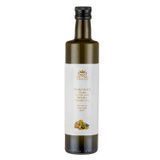
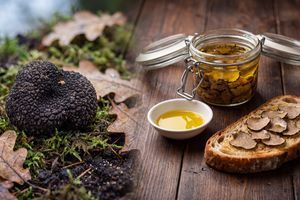
For many, acquaintance with the truffle begins with "truffle oil". And here comes the moment of disappointment: 95% of such products have absolutely no relation to real truffle at all. Their smell is synthetic additives (especially the laboratory-created aroma of 2,4-dithiapentane), no traces of the forest or the hands of a real truffle hunter. It might even be signed "natural aroma", but this can be an imitation — there is no real truffle product there. The acrid, one-dimensional smell of such oil will never compare with the multilayered, complex aroma of the real fungus.
How to choose a real product? The price is significantly higher than the "daily" oil assortment. The smell is subtle, complex, gradually revealing itself, and pieces of truffle might even be encountered in the bottle.

Classics of truffle cuisine: how and with what to cook
The truffle is the main hero of a simple culinary story. It is important to know three rules:
- No rich sauces, strong spices — truffle does not like competition.
- Add truffle to a hot, but not boiling dish (black — a few minutes before serving, white — directly before).
- Choose fats: butter, eggs, cream, cheese. It is they that hold and transmit the subtle volatile compounds of the truffle.
Best combinations:
- Fried eggs or omelet: eggs should be left under one dome along with the truffle in a closed container the day before — they will absorb the aroma even through the shell.
- Pasta: minimum ingredients — a little butter, spices, a little grated cheese, and generous truffle shavings on top.
- Risotto: saturated with Parmesan, rice grains acts as a soft background for the truffle aroma.
- Cheese: Brie, Camembert, Pecorino. Truffle emphasizes creaminess and adds "earthy" depth.

How to store and care
Fresh truffle lives briefly and requires gentle handling.
Wrap the truffle in a paper towel and store it in a glass jar with rice in the coldest part of the refrigerator. The napkin should be changed daily so that excess moisture does not spoil the fungus. Rice will absorb excess moisture and aroma, and later become an excellent base for risotto.
If the truffle has dried up but has not lost its aroma — add it to butter or make "tartufata" (a mixture with mushrooms, herbs, and oil). Freezing is only for exceptional cases, as the aroma will become deeply dull.
Truffle: not just an ingredient, but part of history
We are sure: truffle is not luxury for the sake of luxury. It is a gastronomic moment that remains in memory, even if it is a simple morning fried egg. The key is to feel the land, the season, the hardworking hands of the truffle hunter and the faithful dog, and appreciate the magic of the moment.
The Tartufi.ua team works exactly so that the truffle becomes closer to Ukrainian tables — in simple and sincere gastronomy, where the main value is the taste of the real thing, not legends about expensive delicacies. May the truffle be your culinary adventure that you want to repeat regardless of the day of the week.